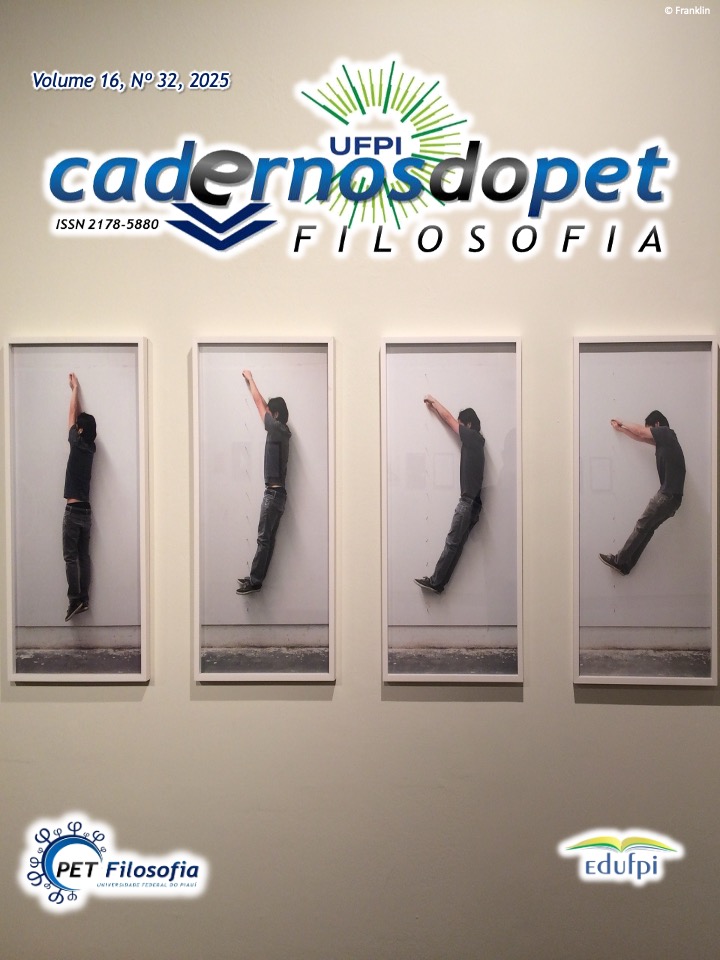
O CONCEITO DE FINITUDE
UMA ANÁLISE DO CONCEITO DE SER-PARA-A-MORTE HEIDEGGERIANO
DOI:
https://doi.org/10.26694/cadpetfilo.v16i32.8000Resumo
Este artigo analisa a ontologia heideggeriana, com foco na investigação da finitude como estrutura fundamental da existência humana. O problema central reside na compreensão de como a morte, vista como possibilidade ontológica e não apenas um evento biológico, pode despertar o Dasein da dispersão inautêntica do cotidiano. A análise parte das categorias de ser-para-a-morte, como ruptura com a impessoalidade, e de temporalidade, compreendida em seus êxtases: o passado como facticidade, o presente como presença resoluta e o futuro como projeto. Conclui-se que a finitude não é uma limitação negativa, mas o horizonte que possibilita a liberdade e a autenticidade. Ao reconhecer a iminência do fim, o indivíduo é convocado a assumir a responsabilidade por suas escolhas e pelo sentido do seu ser, transcendendo a alienação técnica e social contemporânea em direção a uma existência autônoma e plena.